


Let me tell you about the cruise industry’s business model, because it’s important to understand the economic incentives before we get to the part where a man died after being served 33 alcoholic beverages in a matter of hours, restrained by five crew members, injected with antipsychotic drugs, and then stored in a drink refrigerator while the party continued.
Cruise lines make their real money not from tickets, but from onboard spending. The mai tais, the duty-free jewelry, the casino chips, the specialty restaurants, the photo packages. Up to 40% of revenue comes from getting passengers to open their wallets once they’re trapped on a floating resort with nowhere else to go.
And the crown jewel of this revenue strategy? The “bottomless” alcoholic beverage package.
For a flat fee, passengers get unlimited drinks. All-you-can-drink margaritas, piña coladas, frozen daiquiris from machines stationed “in every nook and cranny” of the ship. It’s marketed as luxury, as value, as freedom. Drink like you’re on vacation, because you are!
What it actually is: a liability generator with a swim-up bar.
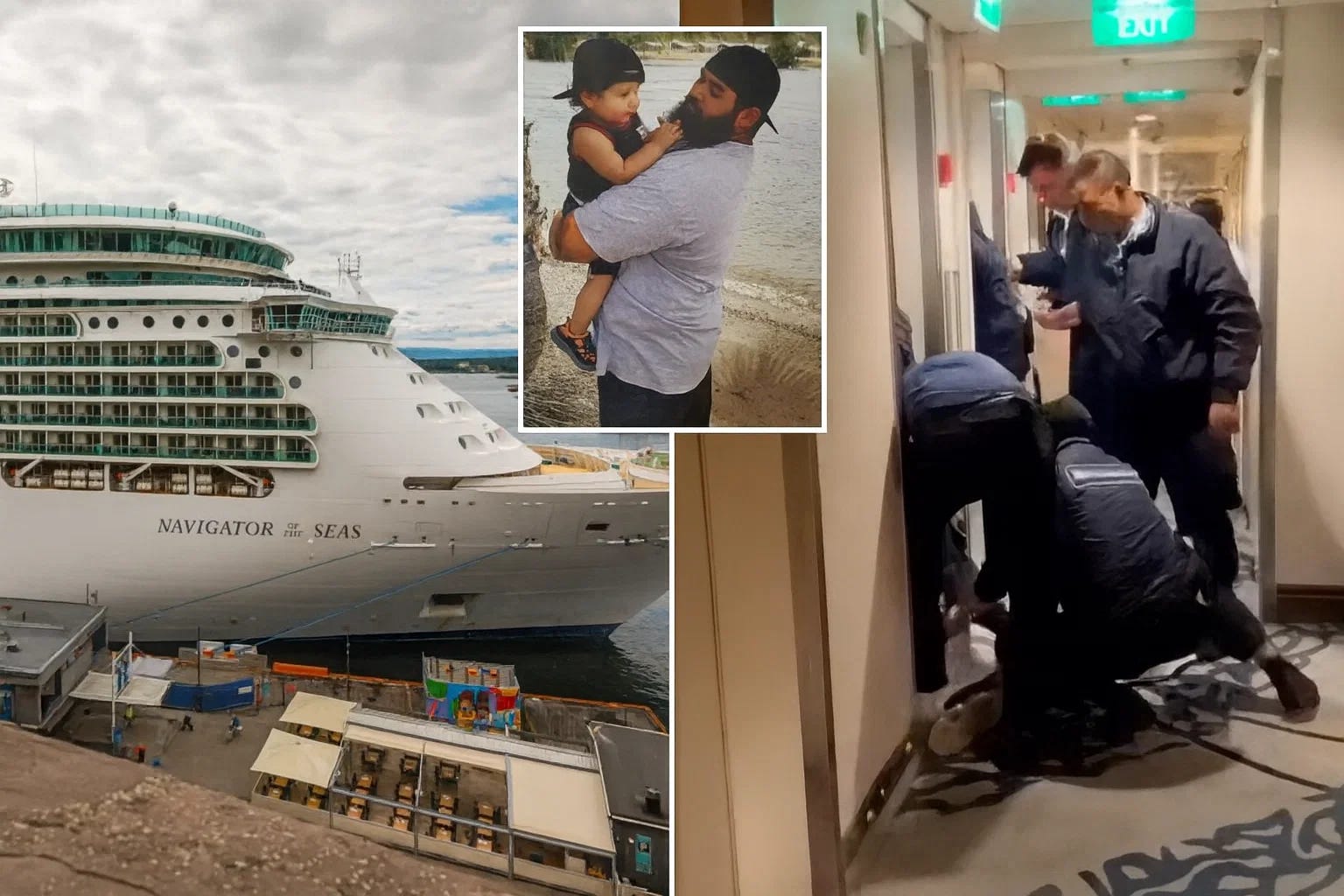
And in December 2024, aboard Royal Caribbean’s Navigator of the Seas, 35-year-old Michael Virgil from Riverside County, California, discovered that “bottomless” has a limit after all.
The limit is death
.
Thirty-Three Drinks and Counting (But Who’s Counting?)
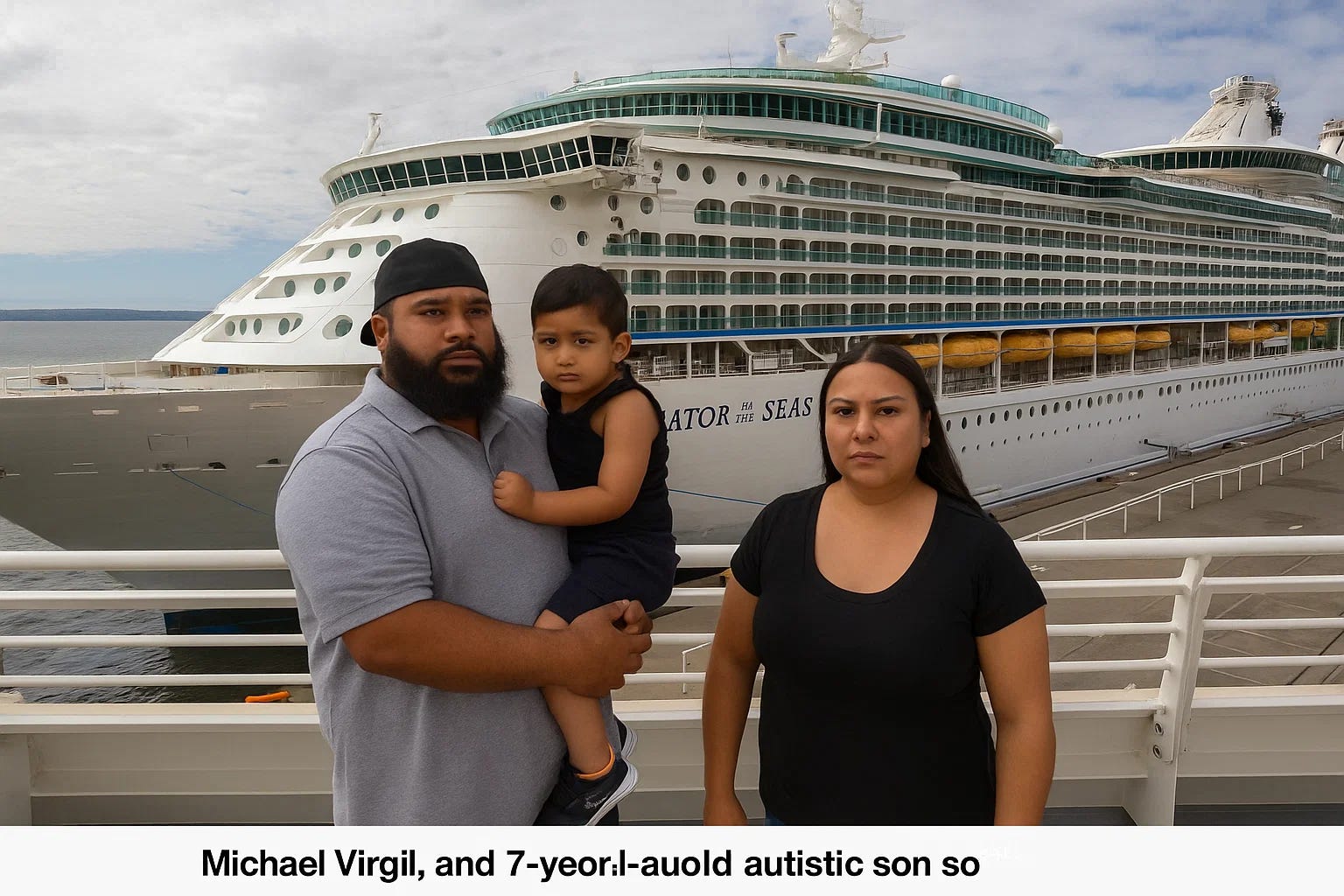
Michael Virgil boarded the Navigator of the Seas with his fiancée Connie Aguilar, their 7-year-old autistic son, and extended family for what was supposed to be a celebratory three-day cruise from Los Angeles to Ensenada, Mexico.
Virgil, described by loved ones as a “gentle giant,” purchased the bottomless beverage package. And according to the lawsuit filed by his family, staff at the ship’s bar served him 33 alcoholic drinks in a matter of hours.
Thirty. Three. Drinks. In hours, not days.
Let me put that in perspective: The CDC defines binge drinking as 5 or more drinks in 2 hours for men. Virgil consumed more than six times that amount in a condensed timeframe. His blood alcohol content later measured between 0.182% and 0.186% — more than twice the legal driving limit.
And at no point did anyone say, “Hey, maybe we should stop serving this guy.”
Because here’s the thing about the bottomless beverage package: It’s not really bottomless. Royal Caribbean’s own policies require bartenders to cut off visibly intoxicated passengers. But those policies conflict with the fundamental business model, which is to sell as much alcohol as possible to people who’ve already paid for unlimited drinks.
It’s like McDonald’s offering an “All You Can Eat Big Mac” promotion and then being shocked when someone shows up expecting to eat a lot of Big Macs. Except instead of indigestion, the consequence is cardiopulmonary arrest.
According to the wrongful death lawsuit, after being served at the ship’s bar, Virgil got lost and became agitated. He was stumbling, disoriented, searching for his cabin but getting off on the wrong deck—visibly intoxicated for anyone with functioning eyes to see.
And the bartenders kept serving him.
Because somewhere between drink seventeen and thirty-three, nobody thought it might be “a little much.”
When Your Security Protocol Is “Pepper Spray and Hope”
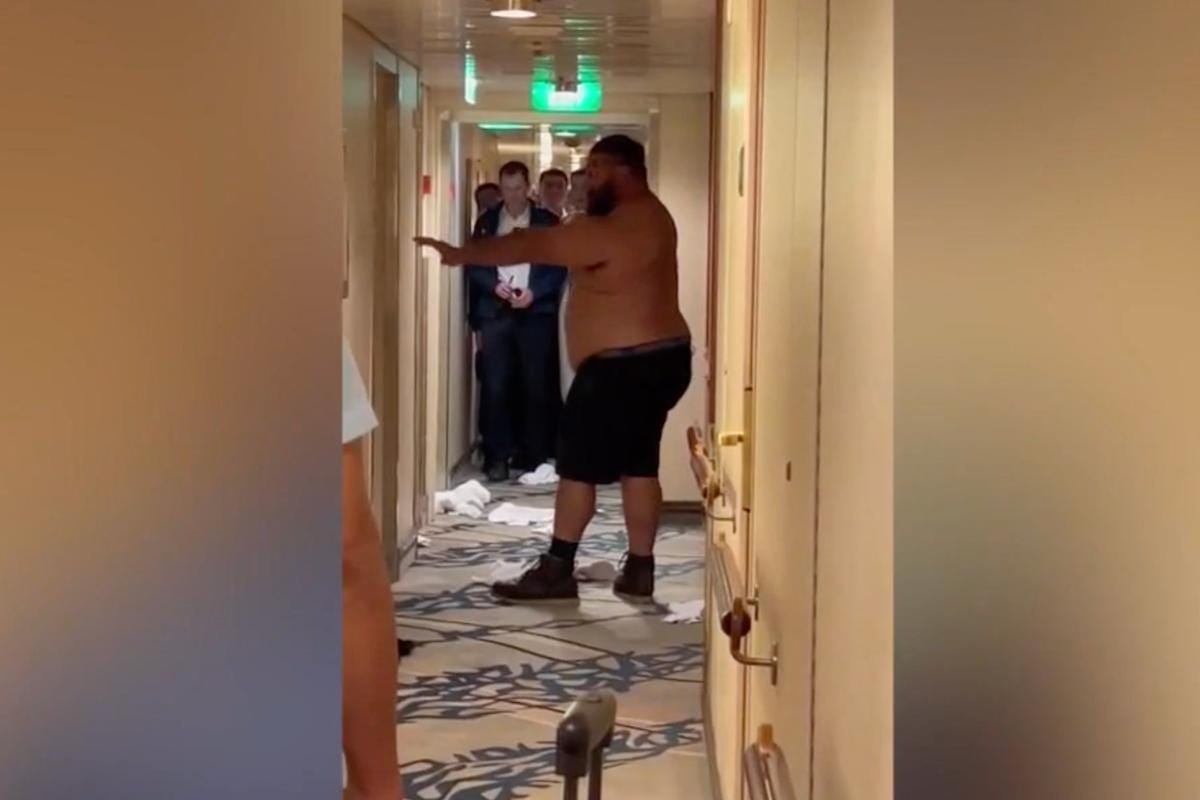
Eventually, Virgil’s intoxication led to what the lawsuit describes as a “violent confrontation.” Eyewitness video captured by fellow passenger Christopher McHale shows a shirtless Virgil kicking at a door, screaming profanities, and threatening others in a narrow hallway.
“He just needed some help,” McHale later told reporters.
Instead, he got five security guards.
The family claims cruise security tackled Virgil to the ground and gave him a sedative. But it was more than just a tackle and a shot: The crew pinned him face-down on the floor in what’s called “prone restraint,” deployed multiple cans of pepper spray, zip-tied and handcuffed him, and — at the captain’s directive — injected him with Haloperidol, a powerful antipsychotic sedative.
Let’s break down what just happened: A man who was over-served alcohol by the cruise line’s own bartenders—33 drinks in hours—became disoriented and aggressive. The response was to:
Tackle him to the ground
Pin him face-down (compressing his torso)
Pepper spray him multiple times
Handcuff and zip-tie him
Inject him with sedatives that are dangerous when combined with alcohol
This is what the cruise industry calls “security protocols.”
The rest of us call it “creating the conditions for asphyxiation.”
The lawsuit alleges that the “prolonged prone restraint” compressed Virgil’s torso, impairing his breathing and leading to mechanical asphyxia — the same mechanism that killed George Floyd. Virgil gasped for air, suffered respiratory failure, cardiovascular instability, and ultimately cardiopulmonary arrest.
He was pronounced dead in the ship’s medical center.
The Los Angeles County Medical Examiner’s Office ruled the manner of death a homicide, attributing it to the combined effects of asphyxia, obesity, an enlarged heart, and alcohol intoxication.
Not an accident. Not natural causes. Homicide.
The Refrigerator That Kept On Cruising
Now here’s where this story transitions from “tragic systemic failure” to “what the actual fuck is wrong with this industry.”
According to the lawsuit, after Virgil died, his fiancée begged the crew to return to port. They refused.
Instead, they stored Michael Virgil’s body in a drink refrigerator — not the ship’s morgue — and continued the cruise for multiple days.
Let me paint you a picture: Somewhere on the Navigator of the Seas, while passengers were doing the limbo by the pool and participating in “Margaritaville at Sea” events, Michael Virgil’s body was being stored next to the mixer for frozen daiquiris.
The cruise line’s spokesperson confirmed this aligns with “industry practices for handling onboard deaths,” where bodies are preserved in refrigerated compartments until reaching a suitable port.
And technically, yes, cruise ships have morgues. They’re typically located on lower decks, hidden from passengers because acknowledging death is bad for the vacation vibe. But here’s the thing: those morgues have limited capacity, especially on voyages with elderly passengers.
So when the morgue fills up, they use freezers. Drink coolers. Whatever refrigerated space is available.
A former cruise ship singer revealed that “free ice cream parties” sometimes signal morgue overflow — a coded way to clear freezer space without alarming guests.
Think about that the next time you’re enjoying a complimentary sundae at sea.
Maritime Law: Where Accountability Goes to Die
You might be wondering: How is any of this legal? How can a cruise line serve someone 33 drinks in a matter of hours, restrain them to death, store their body in a beverage cooler, and just... continue the cruise?
The answer is maritime law, which is like regular law except designed specifically to ensure cruise companies are never held accountable for anything.
Cruise ships operate under the flag of whatever country offers the most favorable regulations — usually Panama, Bahamas, or Malta. This allows them to:
Avoid U.S. labor laws
Pay lower wages to international crew
Operate under looser safety regulations
Limit legal liability
The Cruise Vessel Security and Safety Act of 2010 requires carriers to supervise passengers likely to endanger themselves or others. But enforcement is functionally nonexistent.
Maritime lawyer Keith Brais notes that cruise companies often classify deaths as “natural causes” to evade liability, even when evidence suggests otherwise. And because incidents occur in international waters, jurisdictional questions complicate prosecution.
Royal Caribbean’s official response to Virgil’s death? In a statement, the company said it “cooperated with authorities” and “will refrain from commenting any further on pending litigation.”
Translation: “We are contractually obligated to pretend we care, but we’re not saying anything that could be used against us in court.”
A Pattern, Not an Aberration
This isn’t Royal Caribbean’s first rodeo with alcohol-related deaths.
In 2005, honeymooner George Allen Smith IV vanished from the Brilliance of the Seas amid suspicions of foul play involving alcohol and possible robbery. The case settled for $1.1 million but remains unsolved.
According to data from the Cruise Vessel Security and Safety Act, alcohol plays a role in many onboard deaths and assaults. A 2023 report highlighted over 100 sexual assaults on cruises annually, often linked to excessive drinking.
Security teams on cruise ships are frequently undertrained, recruited from diverse international backgrounds with inconsistent qualifications. They may lack de-escalation training, medical certification, or any understanding of how to handle intoxicated passengers without resorting to force.
And yet cruise lines continue to aggressively market unlimited drink packages, knowing full well that a percentage of passengers will drink themselves into medical emergencies.
Because the profit margin on alcohol is too good to let a few deaths get in the way.
The Vacation Industrial Complex
Let’s zoom out for a moment and talk about what cruise vacations actually are: floating resorts designed to extract maximum revenue from captive customers while minimizing corporate liability.
The entire business model is predicated on:
Getting passengers aboard with cheap ticket prices
Upselling everything once they’re trapped on the ship
Operating under flags of convenience to avoid regulations
Using maritime law to shield the company from accountability
It’s genius, really. Evil, but genius.
You market “all-inclusive paradise.” You sell unlimited drink packages. You station bars everywhere. You create an environment where normal inhibitions dissolve because “you’re on vacation.”
And then when someone drinks 33 beverages in a matter of hours, becomes violent, gets restrained to death, and ends up in a drink cooler, you express sadness, cooperate with authorities, and decline to comment on pending litigation.
The system works perfectly. Just not for the passengers.
What Justice Looks Like When You Die at Sea
Virgil’s family is now seeking unspecified damages and a jury trial. Their attorney, Kevin Haynes, argues: “Somewhere between drink number seventeen and thirty-three, somebody with the cruise line should have recognized that it was a little much.”
It’s a low bar. An embarrassingly low bar. “Maybe stop serving the guy after 17 drinks” shouldn’t be a controversial legal theory.
But in the cruise industry, it is. Acknowledging that serving 33 drinks to one person in a matter of hours was negligent would undermine the entire unlimited beverage package business model.
The lawsuit alleges:
Royal Caribbean failed to supervise Virgil despite his obvious intoxication
Security used excessive force without proper training
Medical staff were ill-equipped for the emergency
The decision to continue the cruise showed callous disregard
All of which is probably true. And none of which will likely result in systemic change.
Royal Caribbean is reporting record post-pandemic profits. Cruises are booming. Passengers keep boarding, keep buying drink packages, keep posting Instagram photos with tropical drinks and sunset views.
And occasionally, some of them die. But that’s just the cost of doing business.
Final Scene: Paradise, Interrupted
Michael Virgil was a 35-year-old father who boarded a cruise ship for a celebratory family vacation. He bought what the cruise line was selling: unlimited drinks, endless fun, escape from everyday life.
And he got exactly what they advertised, right up until the part where 33 drinks in a matter of hours and inadequate safety protocols killed him.
His body was stored in a refrigerator. The cruise continued. Passengers kept drinking. The ship kept sailing.
Because in the cruise industry, the show must go on. The drinks must flow. The profits must climb.
And if a few passengers die along the way — well, that’s what maritime law is for.
Connie Aguilar is now raising their 7-year-old autistic son alone, navigating not just grief but a legal system designed to protect the corporation that killed her fiancé.
Royal Caribbean will likely settle. They’ll pay out an undisclosed sum, admit no wrongdoing, and continue selling bottomless beverage packages on every ship in their fleet.
And next year, millions of passengers will board those ships, buy those packages, and drink those drinks, completely unaware that the cooler holding their mai tai might have recently held someone’s father
.
Welcome aboard the Navigator of the Seas.
The drinks are bottomless.
The accountability is nonexistent.
And if something goes wrong, we’ll just put you in the freezer and keep sailing.
Bon voyage.
DISCLAIMERS (Because Apparently We Need These Now)


